Emanuel Mathias

Schwarze Zunge 2025

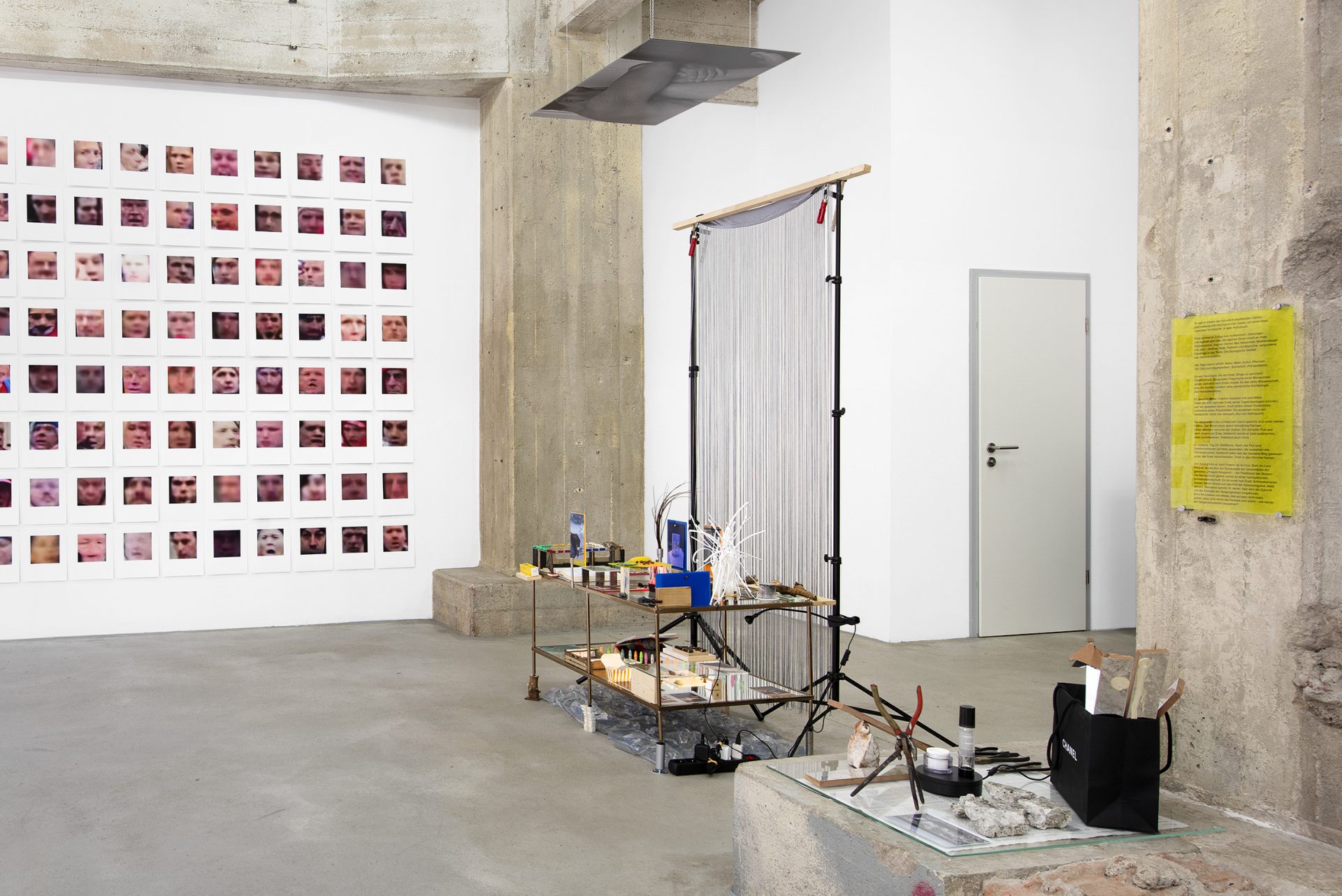
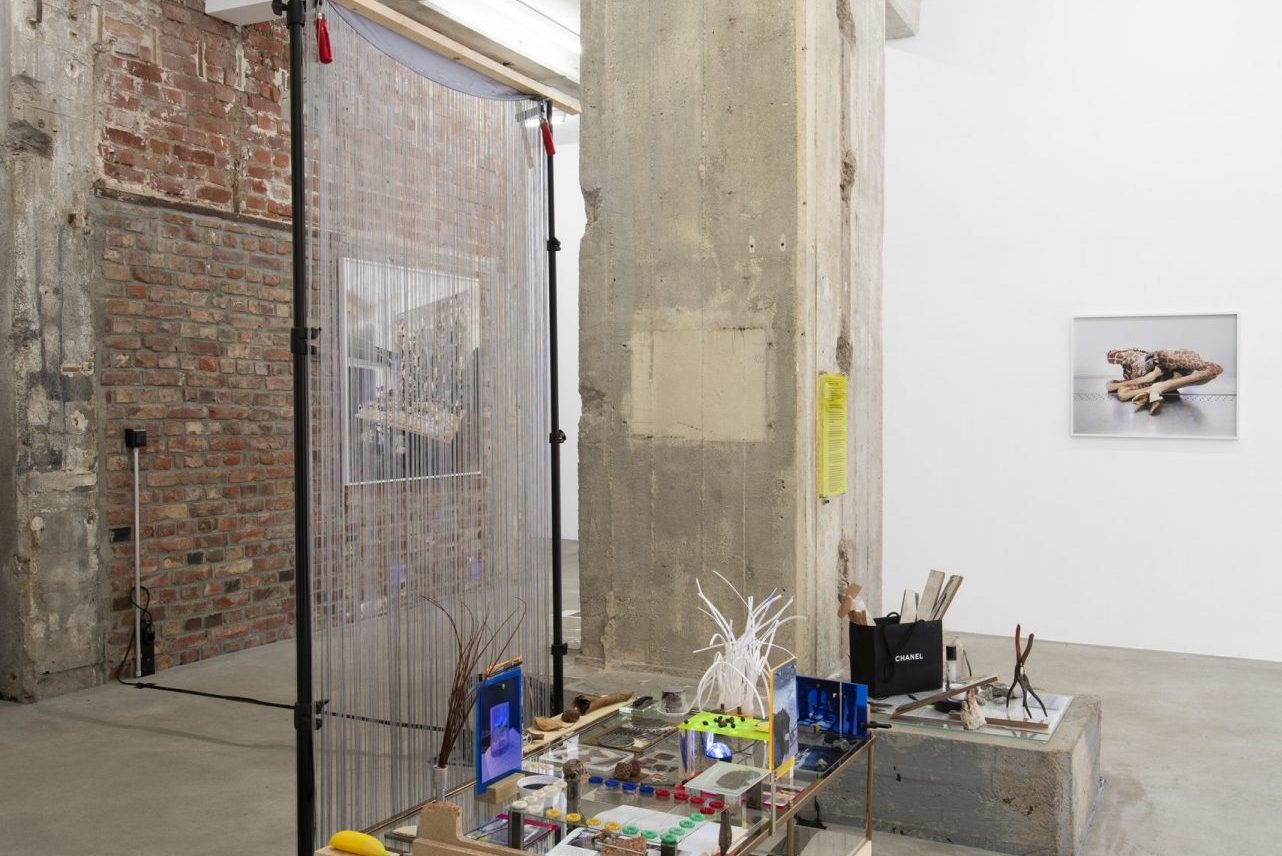
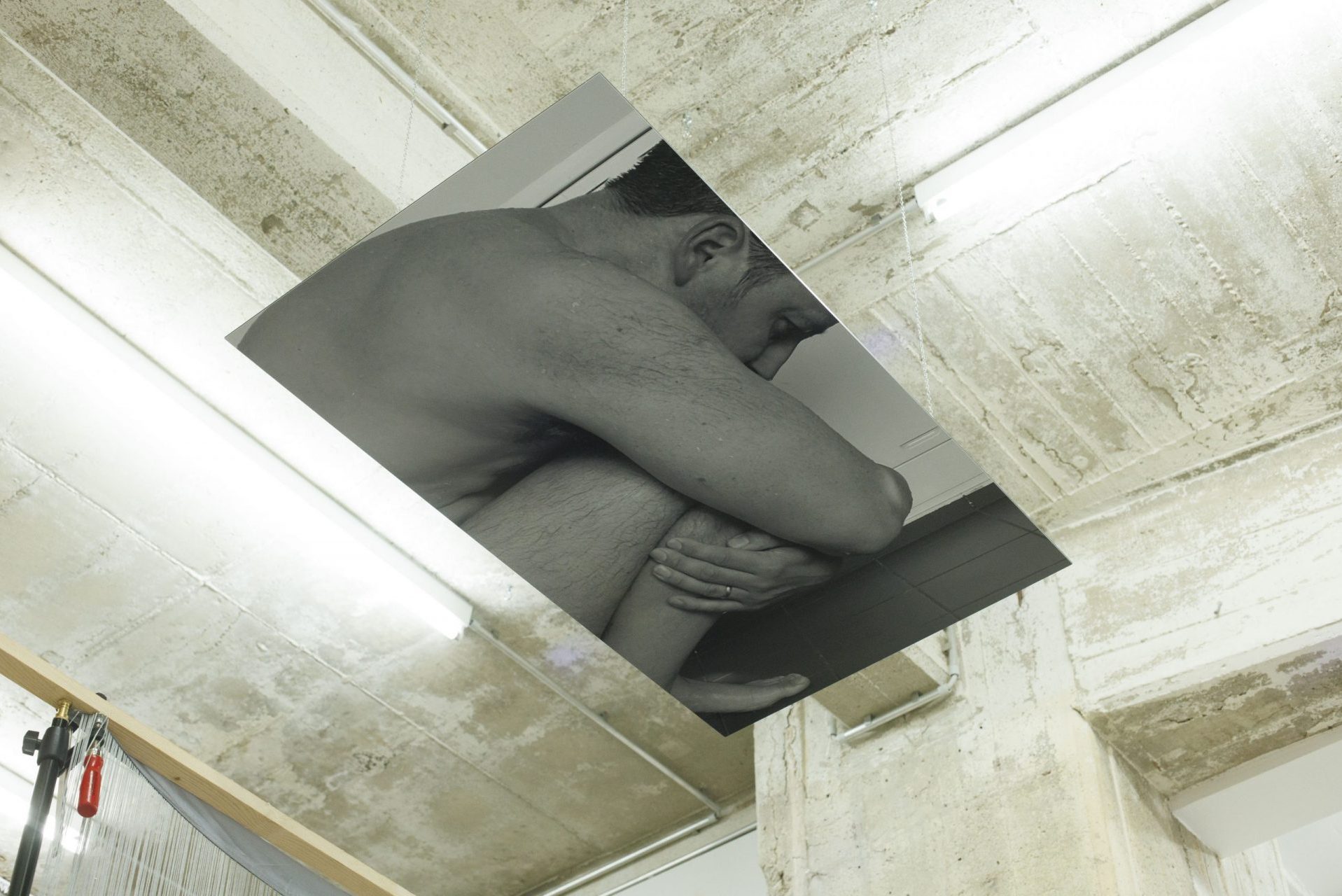
  • Installation view, Raw Lemon Gallery, Leipzig, 2025

Schwarze Zunge 2025

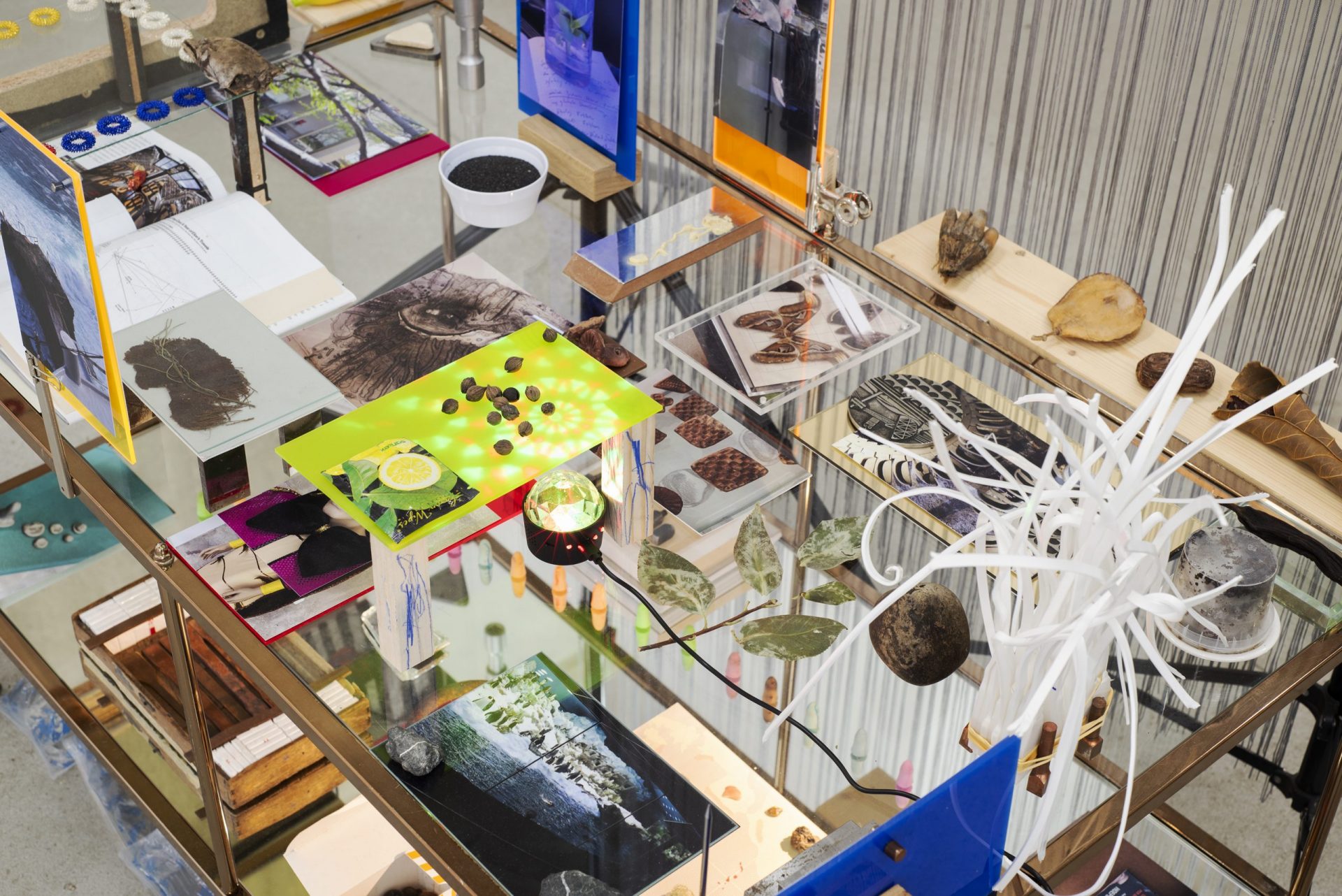
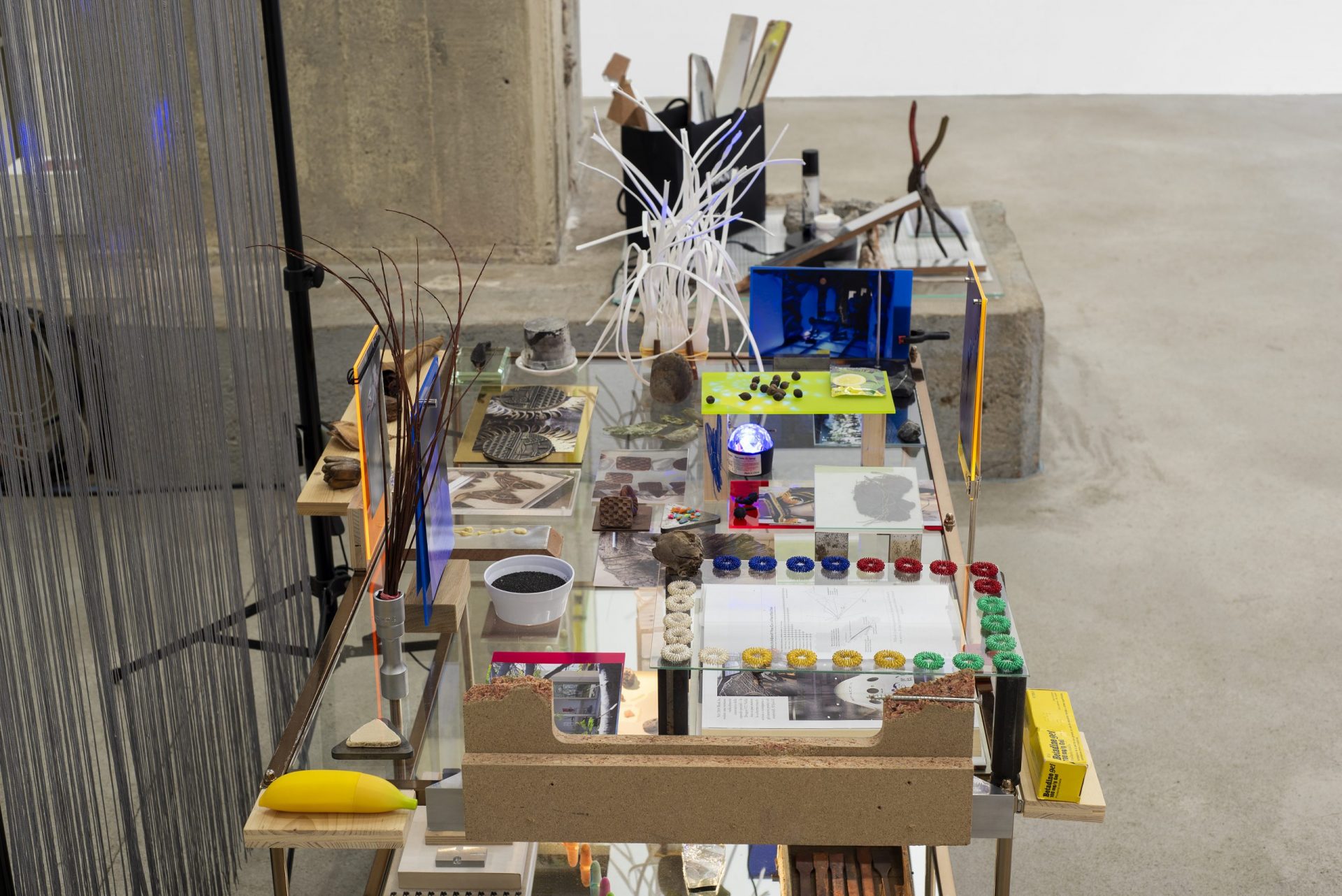
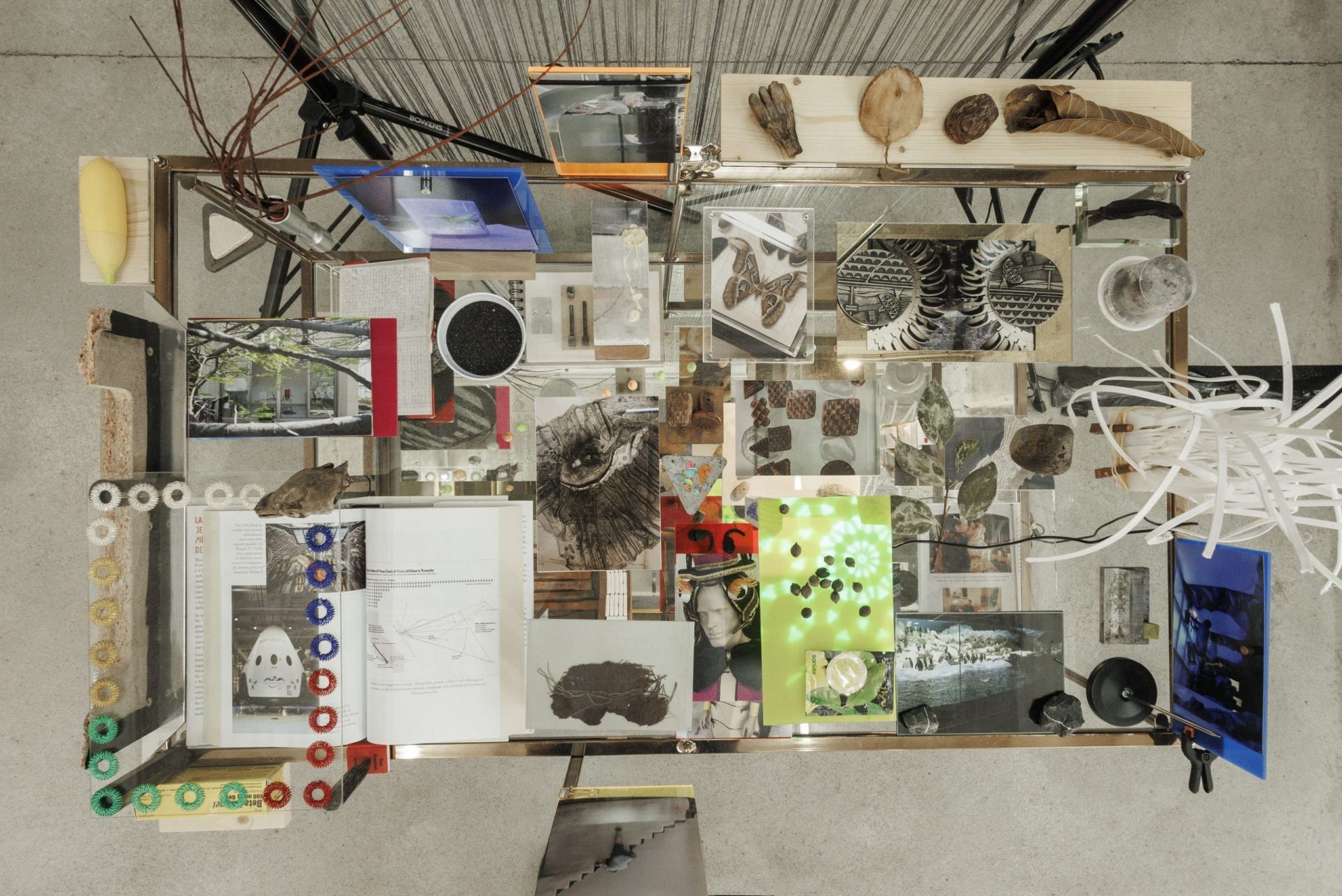
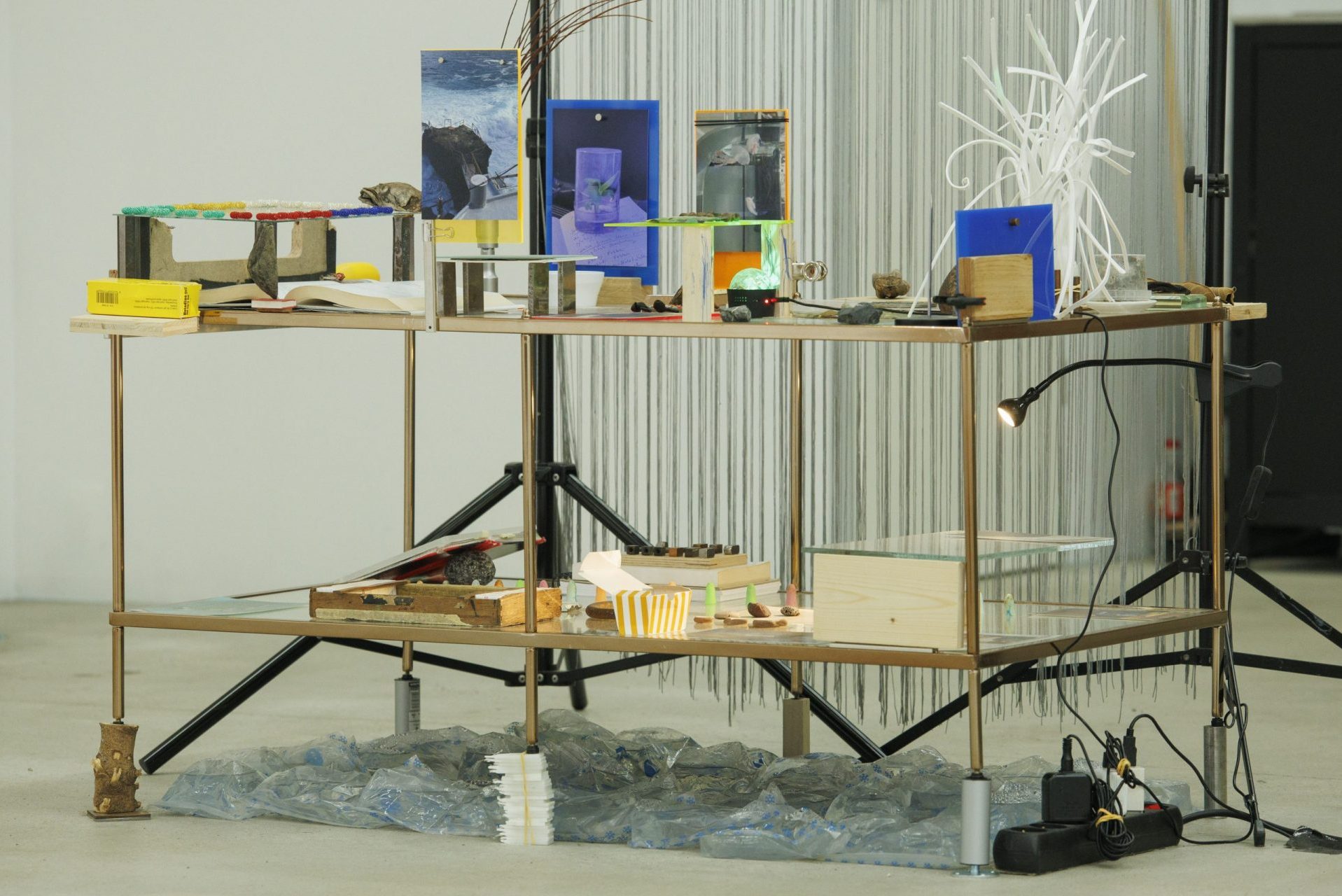
Display case object, dimensions 210 × 70 × 70 cm

Object 2, variable dimensions, 70 × 60 × 40 cm

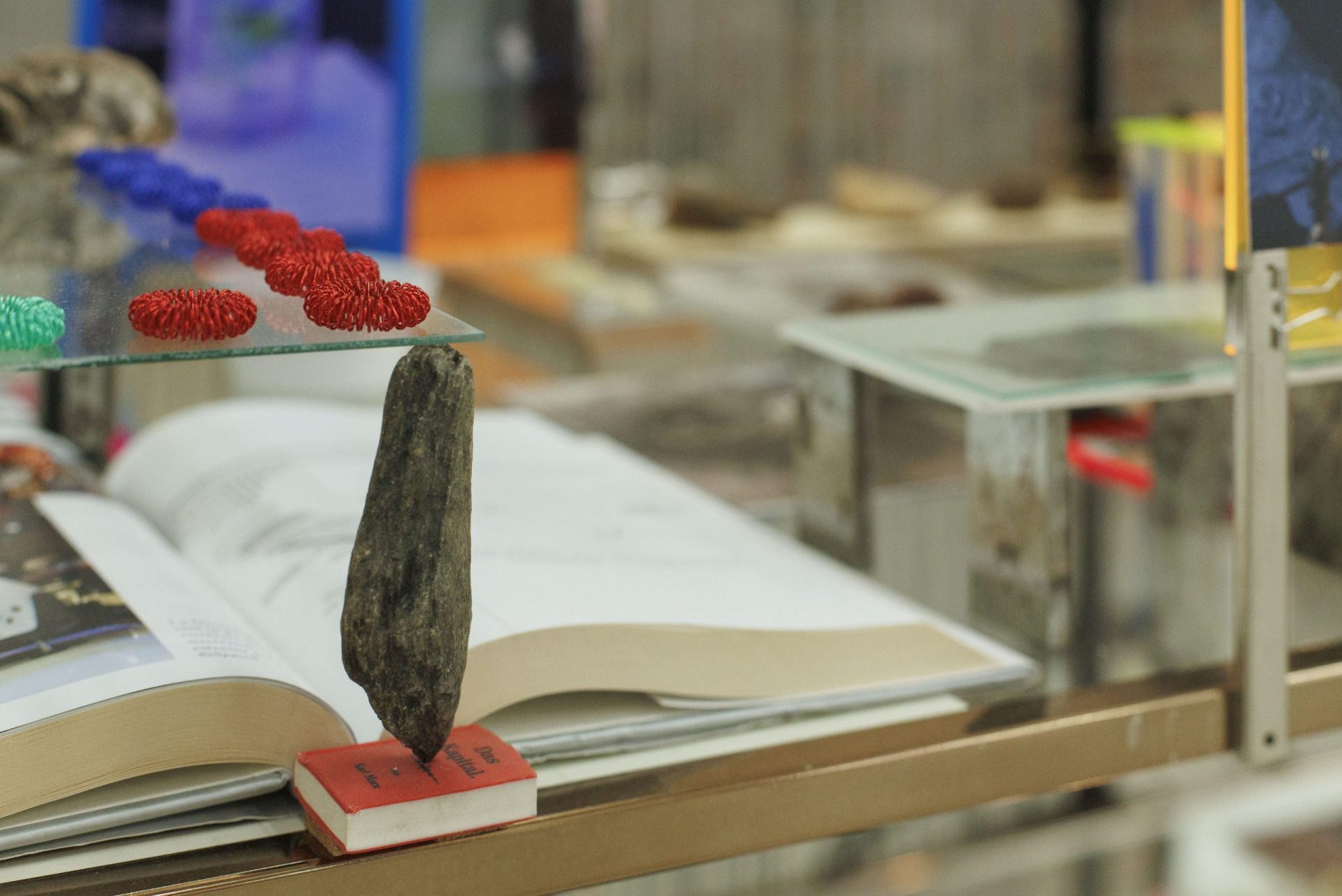
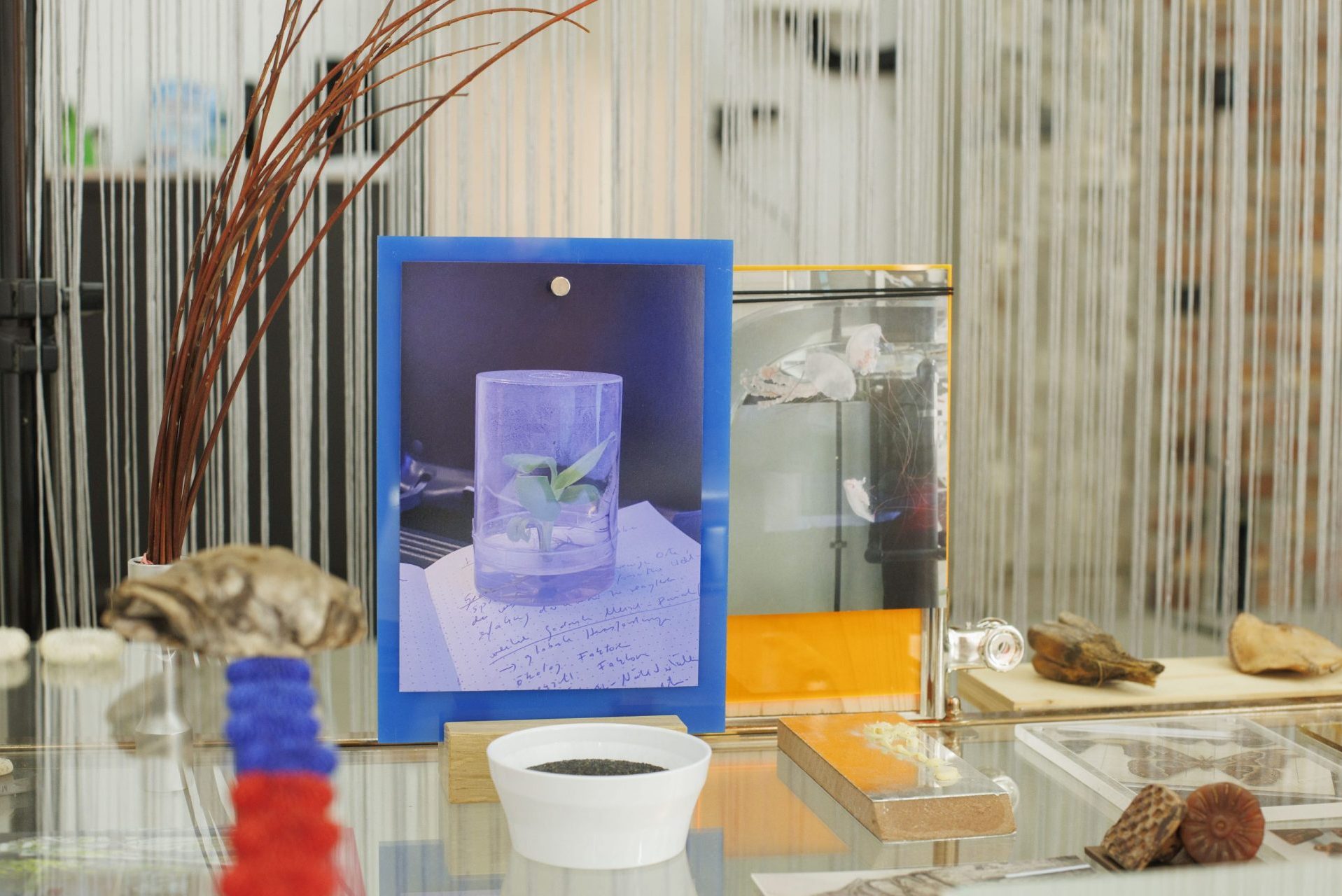
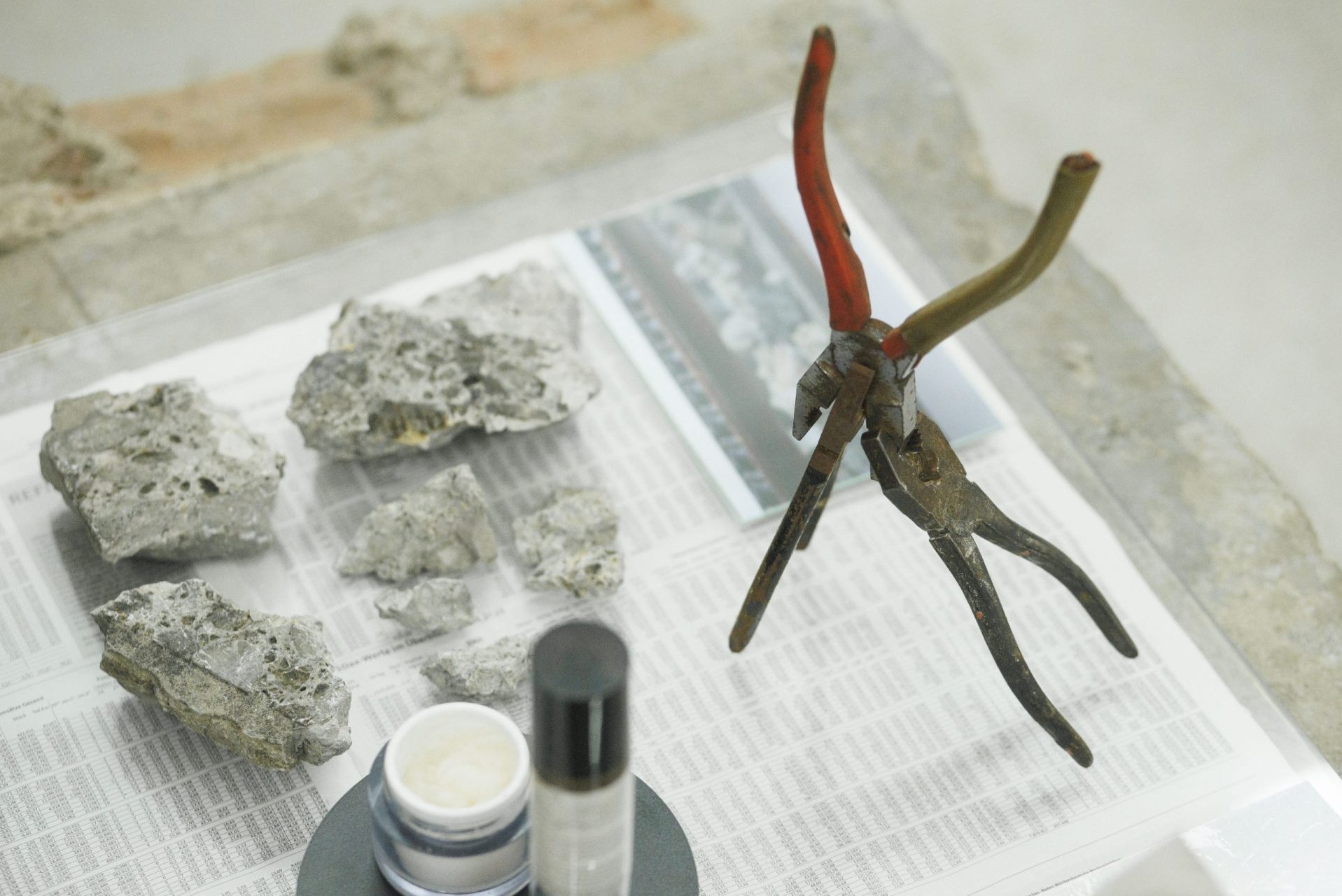
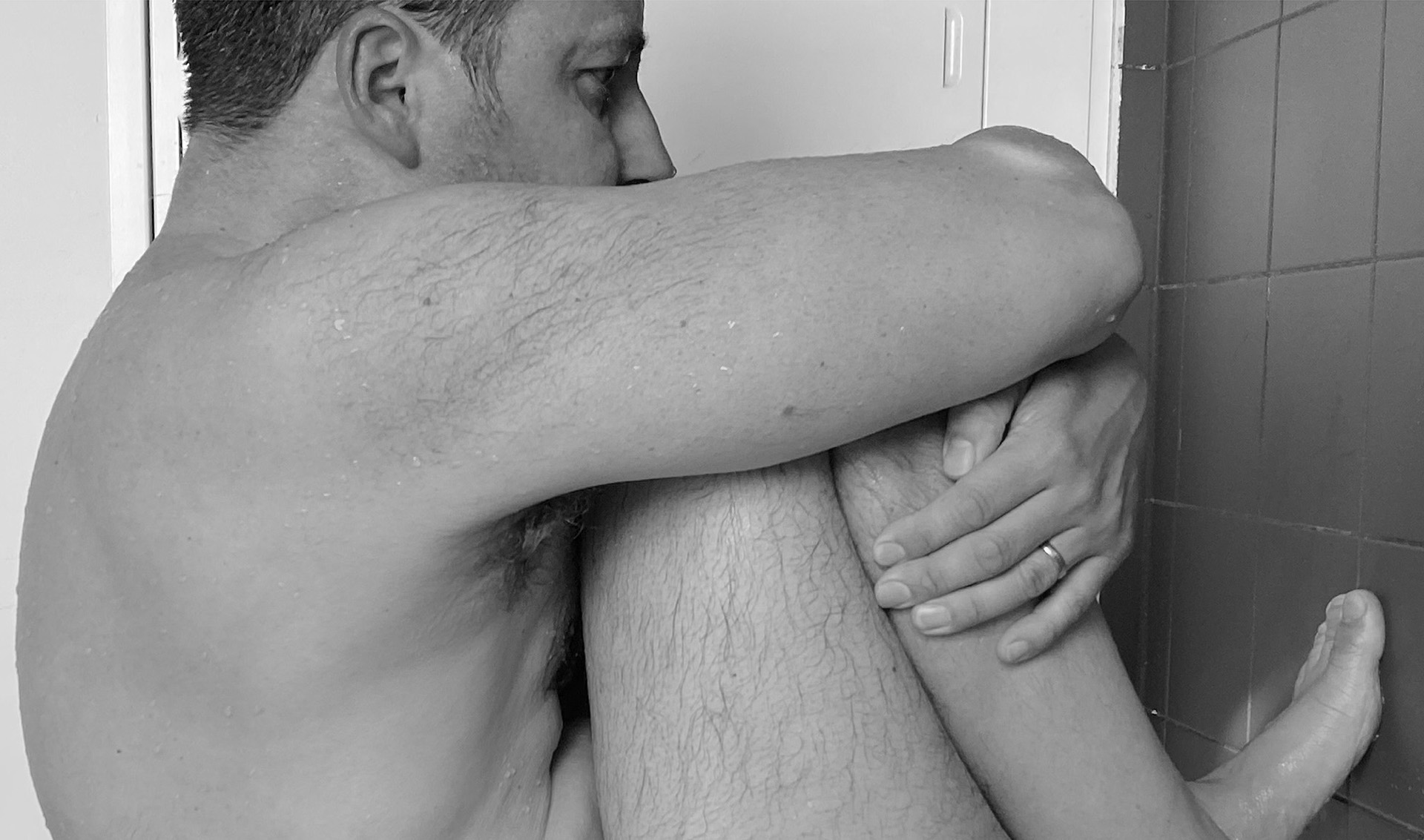
In the installation SCHWARZE ZUNGE, we see the portrait of a fictional human being who leaves Earth after having completely exploited it and rendered it uninhabitable. The point of departure is a scenario from a book about Elon Musk, in which he fantasizes about humanity abandoning Earth in order to establish a second home in outer space.

Texte Schwarze Zunge engIn the installation SCHWARZE ZUNGE, we see the portrait of a fictional human being who leaves Earth after having completely exploited it and rendered it uninhabitable. The point of departure is a scenario from a book about Elon Musk, in which he fantasizes about humanity abandoning Earth in order to establish a second home in outer space.Mathias asks himself: “What would we take with us up into space? Rare earths? Memories? Photographs? Teddy bears? Record players and Pink Floyd’s Dark Side of the Moon*? Or only the useful things? Dental floss, aspirin, contraceptives?”*

In layered strata of photographs, images, and everyday objects—enriched with artistic, scientific, pseudo-scientific, and speculative references—he constructs an artistic, analogue cabinet of curiosities for the digital age. At the same time, he expands and destabilizes the artistic boundaries between biography and autobiography, fiction and autofiction.

He sat in one of the artificially planted gardens and, with a mechanical gesture, made notes in his notebook—on an island, somewhere in the Atlantic.


A black tongue of volcanic stone, coated with asphalt and glass. A warm current brushed past its coasts, carrying with it a quarter of all known marine mammals—dolphins, whales, seals, and manatees, forgotten songs in the deep. The biological diversity was astonishing.


The days were full. Nature, sea, culture, plants. Plenty of time to think. To write. To photograph.


It was nostalgia that drove him to collect things: remnants, testimonies, fragments of a humanity whose time was drawing to a close. It was not science that guided him, but a personal archaeology of disappearance.


He believed these objects would have to be taken to Mars. That there, far from Earth, they might one day testify to who we had been. Yet each of these found pieces lacked any plausibility. They spoke not of progress, nor of reason. Only of longing.


A magnetic field of black sand stretched beneath his feet. The wind moved through artificial palm trees. Beneath it all, the volcano rumbled—a dull pulse from the interior of the Earth. Perhaps it would erupt soon, resetting everything. Perhaps not. 


He wrote: Day 24. Cliff coast. After the tide, rock formations have become visible that resemble cave models. Perhaps that would have been the better path: to disappear beneath the earth. Instead of fleeing into the sky.


In the evening he drove to Puerto de la Cruz. There, in Loro Parque, he was presented with a spectacle of a special kind. “Penguin Kingdom” —a conveyor belt of illusion: humanity glides past a reconstructed Greenland landscape. It is exactly zero degrees. Snow cannons blow fine dust onto the feathers of the emperor penguins. Everything sparkles. Noone speaks. He thinks: here, the future is frozen with the energy of the past. A simulation of something that will soon no longer exist. And if the camera were to turn—what would a reverse shot look like?

show more

Emanuel Mathiasis an artist and researcher. In his work, he explores relationships of distance and proximity within interdisciplinary contexts—between art and science, humans and nature, fiction and reality. He is particularly interested in photography as a record of a standpoint: the position a photographer assumes in relation to the object of their interest. Is it even possible to portray a person within a single photograph? This is a question that preoccupies Emanuel Mathias.


Mathias researches scientists and, in a reflexive feedback loop, continually reflects upon himself in the process. In the installation SCHWARZE ZUNGE(“Black Tongue”), we encounter the portrait of a fictional human being who leaves Earth after having completely exploited it and rendered it uninhabitable. What sounds like science fiction is, in fact, not so far-fetched. The starting point is a similar scenario described in a book about Elon Musk, in which he speculates about humanity leaving Earth to establish a second home in outer space. To what extent space enthusiasts understand this as a critique of their own turbo-capitalist, unchecked consumption and the exploitation of natural resources remains unclear.


Mathias asks: “What would we take with us into space? Rare earth elements? Memories? Photographs? Cuddly toys? Record players and Pink Floyd’s The Dark Side of the Moon? Or only what is useful—dental floss, aspirin, contraceptives?”A pressing question recurs throughout his work: What makes us human in the first place? And if we no longer need Earth, what would we need elsewhere to survive—besides oxygen?


Mathias’ vitrined portrait certainly expands the conventional understanding of photographic portraiture. Through layered photographs, images, and everyday objects—enriched with artistic, scientific, pseudo-scientific, and speculative references, adorned with flea-market curiosities and personal miscellany, an exuberant assemblage of colors, forms, and fantastical elements—he constructs an artistic, analogue cabinet of curiosities for the digitalage. At the same time, he dissolves the artistic boundaries between biography and autobiography, fiction and autofiction.


Emanuel Mathias, born in 1981 in Halle (Saale), studied photography from 2002 to 2009 at the Academy of Fine Arts Leipzig (HGB) underProf. Timm Rautert and Prof. Christopher Muller. From 2009 to 2011, he was a Meisterschüler (master student) of Prof. Tina Bara. In 2024, he completed his doctorate at the Bauhaus University Weimar under the supervision of Prof. Michael Lüthy and Prof. Michaela Schweiger. He lives and works in Leipzig.

show more